'70s Rock Legend Makes Statement After Death of Music Icon

Paul Stanley, the man behind the iconic rock band KISS, joins themusiccommunity as they mourn the passing of the legendary Neil Sedaka.

Parade

The 74-year-old frontman commemorated the fellow music icon's legacy by sharing a moving tribute on social media.

In a post on X, he shared a New York Times article announcing Sedaka's death, accompanied by a message honoring the late singer-songwriter as a foundational figure in music.

Moreover, he also highlighted his works, celebrating the timeless impact they had in the industry.

Gene Simmons and Paul Stanley of KISS perform during their Sonic Boom Over Europe tour at Wembley Arena on May 12, 2010 in London, England.

"RIP Neil Sedaka. One of the Brill Building greats responsible for virtually everything on the radio before the "British Invasion". Goffin&King, Mann&Weil, Barry&Greenwich, Sedaka&Greenfield. Hits later showed great songwriting never goes out of style," he captioned his post.

The respectful salute drew responses from fans who were also mourning Sedaka's passing.

"True legend, whose music aged gracefully as he did,"a commenter said.

Fans also recognized Stanley for honoring the passing of a fellow music legend.

Advertisement

"I believe that a true musician appreciates other types of music even if it isn't their own style. Neil was a great songwriter and keyboard player, whether people like his music or not. Thanks, Paul, for acknowledging him,"one wrote.

OnFriday, the "Calendar Girl" singer passed away at the age of 86.

The news was confirmed by his family, expressing how "devastated" they are by the passing of their beloved husband, father,grandfatherand a "true rock and roll legend."

"Our family is devastated by the sudden passing of our beloved husband, father and grandfather, Neil Sedaka," the Sedaka family shared in a statement as cited byPEOPLE."A true rock and roll legend, an inspiration to millions, but most importantly, at least to those of us who were lucky enough to know him, an incredible human being who will be deeply missed."

Neil Sedaka performs live on stage at the Royal Albert Hall on September 18, 2017 in London, England.

Following the family's statement regarding the passing, they are keeping other details private, including Sedaka's cause of death.

Early reports suggested he suffered a sudden medical emergency Friday morning, leading to his being rushed to a hospital by ambulance, according toTMZ, which first broke the story.

Apart from his hit songs like "Oh! Carol" and "Happy Birthday Sweet Sixteen" and others he also wrote songs for other artists, includingConnie Francis' "Stupid Cupid" and "Everybody's Somebody's Fool" as well as Bobby Vee's "Take Good Care of My Baby."

Related: 1970 Classic Was a No. 1 Hit 56 Years Ago Today

This story was originally published byParadeon Mar 1, 2026, where it first appeared in theNewssection. Add Parade as aPreferred Source by clicking here.

‘70s Rock Legend Makes Statement After Death of Music Icon

Paul Stanley, the man behind the iconic rock band KISS, joins themusiccommunity as they mourn the passing of the legendar...
'SNL' takes on Iran attacks and Khamenei killing in cold open

The latest "SNL" cold open couldn't be more timely.

USA TODAY

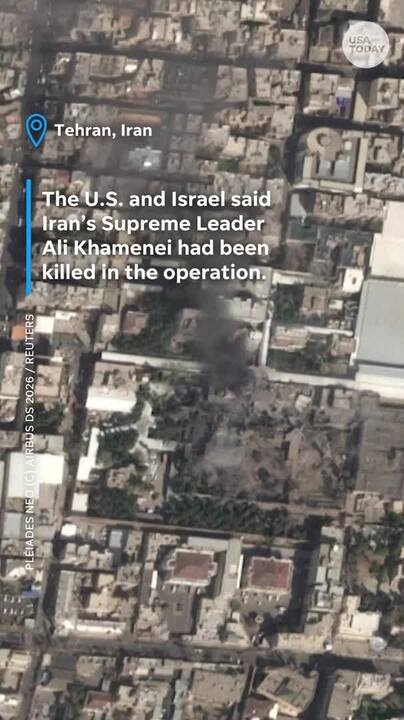
"Saturday Night Live"kicked off its Feb. 28 episode with a sketchaddressing news that the United States and Israel launched military strikes and combat operations against Iranearlier in the day, killing Supreme Leader Ayatollah Ali Khamenei.

In the cold open, James Austin Johnson played PresidentDonald Trumpdelivering remarks and declaring, "Happy World War III to all who celebrate!"

Johnson's Trump went on to say he launched the attack on Iran because he and his "Board of Peace decided that we were bored of peace" and because he needed help "distracting from the Epstein files."

"I know on the campaign trail I promised no new foreign wars," he said. "But listen: Wars, plural, right? I'm allowed to do one."

Surprise!'Heated Rivalry' star Hudson Williams joins Connor Storrie on 'SNL'

James Austin Johnson as President Donald Trump on Dec. 6, 2025.

In a meta moment, Johnson's Trump also implied the breaking news required "SNL" to throw out a cold open focused on the president's State of the Union address earlier in the week.

"People are asking, 'Why attack Iran now?' Well, we had to strike in the early hours of Saturday, which has two advantages militarily: One, it's after the stock market closes for the weekend, and two, it's to cause immeasurable fear, rage and chaos in the 'SNL' writer's room," he said. "Those guys were going crazy. They probably had a big State of the Union address thing they were going to do. Not anymore!"

Advertisement

Colin Jostsoon entered as Defense SecretaryPete Hegsethto declare that although he seems confident, "I am scared and I don't know what I'm doing. When he said we were going to blow up the leader of Iran, I thought he was kidding."

Harry Styles is returning to 'SNL':Get the details

The "SNL" sketch kicked off the show's first new episode after a nearly month-long hiatus. It was also a return to the sketch show's typical format of beginning with a Trump spoof;the cold open of the previous episode on Jan. 31, hosted by Alexander Skarsgård, was rare in that it didn't feature Johnson's portrayal of the president. Instead, former cast member Pete Davidson returned to play White House border czarTom Homan.

Connor Storriehosted the Feb. 28 episode of "SNL," coming off the massive success of "Heated Rivalry." The hockey romance series, streaming on HBO Max, has catapulted Storrie from obscurity to stardom, and the actor made his debut on late-night television in January with a "Late Night With Seth Meyers" interview.

'SNL' cold open:Trump distracts from 'freaks and psychos' in ICE

Mumford & Sons served as musical guest for Storrie's "SNL" episode.

Who's hosting 'SNL' next?

Saturday's episode is the first ofthree consecutive weeks of new "SNL" shows.

Next week's episode will feature thereturn of Ryan Gosling, who is serving as host for the fourth time alongside musical guest Gorillaz. The week after,Harry Styles is doing double dutyas host and musical guest on March 14.

This article originally appeared on USA TODAY:'SNL' cold open addresses Trump's Iran attacks, Khamenei killing

'SNL' takes on Iran attacks and Khamenei killing in cold open

The latest "SNL" cold open couldn't be more timely. "Saturday Night Live"kicked off it...
How the World Is Reacting to the Attack on Iran

A young Iranian protester shouts anti-U.S. and anti-Israeli slogans during an anti-war protest against the U.S. and Israeli military attacks, in Tehran, on Feb. 28, 2026. Credit - Morteza Nikoubazl—NurPhoto via Getty Images

Time

World leaders reacted with a mix of support, condemnation and urgent calls for restraint after the United States and Israel launched a sweeping military campaign against Iran on Saturday thatkilledSupreme Leader Ayatollah Ali Khamenei.

President Donald Trump announced Khamenei's death in a post on Truth Social, calling it "the single greatest chance for the Iranian people to take back their country."

The U.S. and Israel announced their strikes on the Middle Eastern nation in the early hours of Saturday morning after weeks of Trump threatening Iran over their nuclear deal program. The strikes hit the capital Tehran, as well as Qom, Karaj, Kermanshah, Tabriz and Isfahan, where there is a major nuclear facility.

Read More:Does Trump Have the Legal Authority to Strike Iran? An Expert Explains

In the hours after the initial U.S. and Israeli strikes, Russia and China released statements in support of Iran, while Canada, Australia and Ukraine were among those who expressed support for the U.S. and Israel. Several world leaders urged restraint and de-escalation on both sides moving forward.

Here is a round up of what world leaders have said about the operation that has begun war in the Middle East.

United Kingdom

Prime Minister Keir Starmer chaired a meeting of the government's emergency Cobra committee as the country weighs its response to the attacks and Tehran's retaliation across the Gulf.

It did not participate in the military action, but the country had deployed RAF Typhoons to Qatar to protect the al-Udeid airbase and allied bases across the region.

The UK government on Saturday said in a statement it "does not want to see further escalation into a wider regional conflict." Still, a government spokesperson emphasized that "Iran must never be allowed to develop a nuclear weapon and that is why we have continually supported efforts to reach a negotiated solution."

Starmer released a joint statement with French President Emmanuel Macron and  German Chancellor Friedrich Merz, telling Iran to stop their retaliatory attacks on countries in the Middle East.

"We condemn Iranian attacks on countries in the region in the strongest terms," the joint statement reads. "We call for a resumption of negotiations and urge the Iranian leadership to seek a negotiated solution. Ultimately, the Iranian people must be allowed to determine their future."

Russia

Russia condemned the U.S. and Israel's attack, calling it  "a pre-planned and unprovoked act of armed aggression against a sovereign and independent U.N. member state," in a statement from Russia's Foreign Affairs Ministryposted to Telegram.

It accused the U.S. and Israel of  "plunging the Middle East into an abyss of uncontrolled escalation" and said the attacks could cause a "humanitarian, economic and possibly radiological catastrophe" in the Middle East.

China

China's Foreign Ministry spokespersonsaid on Xthat "Iran's sovereignty, security and territorial integrity should be respected."

"China calls for an immediate stop of the military actions, no further escalation of the tense situation, resumption of dialogue and negotiation, and efforts to uphold peace and stability in the Middle East," the statement continued.

France

In addition to the joint statement with the leaders of the United Kingdom and Germany, French President Emmanuel Macronsaid on X, in a post originally in French, that the escalation "is dangerous for all."

"It must stop," he added. "The Iranian regime must understand that it now has no other option but to engage in good faith in negotiations to end its nuclear and ballistic programs, as well as its regional destabilization activities. This is absolutely necessary for the security of all in the Middle East."

He called for an "urgent" meeting of the United Nations Security Council.

European Union

Ursula von der Leyen, the European Union's chief executive, saidin a statement on social mediathat the EU has "consistently promoted diplomatic efforts aimed at addressing the nuclear and ballistic programmes through a negotiated solution.""We call on all parties to exercise maximum restraint, to protect civilians, and to fully respect international law," she said.

Canada

Prime Minister Mark Carney saidin a statement on Xthat Canada supports the U.S. "acting to prevent Iran from obtaining a nuclear weapon and to prevent its regime from further threatening international peace and security."

"Canada's position remains clear: The Islamic Republic of Iran is the principal source of instability and terror throughout the Middle East, has one of the world's worst human rights records and must never be allowed to obtain or develop nuclear weapons."

Australia

Australia's Prime Minister, Anthony Albanese, said in a statement on X that the country backs the U.S. in their military operation.

"We support the United States acting to prevent Iran from obtaining a nuclear weapon and to prevent Iran continuing to threaten international peace and security," he said.

The country also updated their travel recommendations to "Do Not Travel" for Lebanon and Israel.

Pakistan

Pakistan's Ministry of Foreign Affairs released astatementSaturday condemning what it calls "unwarranted attacks against the Islamic Republic of Iran," as well as retaliatory attacks by "Iran against the brotherly countries of Saudi Arabia, Bahrain, Jordan, Kuwait, Qatar and the UAE."

Advertisement

The Ministry confirmed that a Pakistani national was killed in the UAE during the attacks.

"We urge all sides to refrain from any further actions that may undermine the security and territorial integrity of other regional countries," the statement read.

India

India's Ministry of Foreign affairssaid in a statementthat the country is "deeply concerned at the recent developments in Iran and the Gulf region."

"We urge all sides to exercise restraint, avoid escalation, and prioritise the safety of civilians," it continues. "Dialogue and diplomacy should be pursued to de-escalate tensions and address underlying issues. Sovereignty and territorial integrity of all states must be respected."

Spain

Spain Prime Minister Pedro Sánchezcalled on Xfor " immediate de-escalation and full respect for international law," decrying the potential for another "prolonged" war in the Middle East.

"We reject the unilateral military action by the United States and Israel, which represents an escalation and contributes to a more uncertain and hostile international order," he said. "We likewise reject the actions of the Iranian regime and the Revolutionary Guard."

Saudi Arabia

The Saudi Foreign Affairs Ministry condemned Iran's retaliatory strikes across the region in a statement.

"The Kingdom of Saudi Arabia condemns and denounces in strongest terms the blatant Iranian aggression and the flagrant violation of the sovereignty of the U.A.E., Bahrain, Qatar, Kuwait, and Jordan,"  the statement reads.

United Arab Emirates

After the UAE was hit by retaliatory strikes from Iran, its Ministry of Foreign Affairscondemnedits neighbor in a statement, calling the strikes a  "flagrant violation of national sovereignty and a clear breach of international law and the Charter of the United Nations."

"The UAE underscored that it retains its full and legitimate right to respond to these attacks in a manner that safeguards its sovereignty, national security, and territorial integrity, and ensures the safety of its citizens and residents, in accordance with international law," the statement continued.

Oman

Oman's Foreign Minister Badr Al Busaidisaid on XSaturday after the attacks that he was "dismayed."

"Active and serious negotiations have yet again been undermined," said Al Busaidi, who has been a key mediator in recent U.S.-Iran nuclear talks. "Neither the interests of the United States nor the cause of global peace are well served by this. And I pray for the innocents who will suffer."

United Nations

Volker Türk, the UN's Human Rights Commissioner, criticized both the strikes against Iran, and Iran's retaliatory strikes."As always, in any armed conflict, it is civilians who end up paying the ultimate price," he said in a statement on Saturday. "I call for restraint and implore all parties to see reason, to de-escalate, and for a return to the 'negotiating table' where they had been actively seeking a solution only hours earlier."

United Nations Secretary-General António Guterres also condemned military action on all sides of the conflict.

"I call for an immediate cessation of hostilities & de-escalation. Failing to do so risks a wider regional conflict with grave consequences for civilians & regional stability," Guterressaid on X

He also pointed out in the post that the UN's Charter prohibits "the threat of the use of force against the territorial integrity or political independence of any state, or in any other manner inconsistent with the Purposes of the United Nations."

Ukraine

Ukrainian President Volodymyr Zelensky condemned Iran for being "Putin's accomplice" in a poston X reactingto the escalation.

"It is important that the United States is acting decisively. Whenever there is American resolve, global criminals weaken. This understanding must also come to the Russians."

Albania

Albania Prime Minister Edi Ramasaid on Xthat Albania stands "firm with Israel and with the peace-seeking brotherly Arab countries" and that it supports the United States' military contribution.

"We fully endorse every decisive effort to prevent once and for all the murderers in Tehran from acquiring nuclear or any other military capacity to harm Israel or any other peace-loving nation in the Middle East," Rama said. "Terrorism must be named. And once named, it must be stopped."

Hungary

Hungarian Prime Minister Viktor Orbán, a Trump ally in Europe, immediately expressed concerns for how the strikes would impact oil prices. The strikes, he toldreporters, "doubled the importance of the Friendship oil pipeline," which runs through Ukraine. Shipments of Russian oil have been disrupted since January, and Orbán has accused Ukraine ofimposingan "oil blockade."

Kuwait

Kuwait's Ali Al Salem Air Base, which is used by the U.S. military, was also targeted as part of Iran's military retaliation. Kuwait released a statement condemning the Iranian attacks on their soil and asserted their right to respond to the "brazen attack" via Article 51 of the UN Charter.

Qatar

In similar statements to Kuwait and UAE, Qatar condemned Iran's retaliatory attacks and reaffirmed their own right to respond, as per international law.

"The State of Qatar expresses its strong condemnation of the targeting of Qatari territory with Iranian ballistic missiles, considering it a flagrant violation of its national sovereignty, a direct infringement on its security and territorial integrity, and an unacceptable escalation that threatens the security and stability of the region," the statement,posted to X, read.

Lebanon

Lebanese Prime Minister Nawaf Salamsaid on Xthat he "will not accept anyone dragging the country into adventures that threaten its security and unity."

Contact usatletters@time.com.

How the World Is Reacting to the Attack on Iran

A young Iranian protester shouts anti-U.S. and anti-Israeli slogans during an anti-war protest against the U.S. and Israe...
A look at Middle East figures killed by Israel in recent years

BEIRUT (AP) — Israel has killed multiple senior officials with Iran's armed proxies like Hamas in Gaza and Hezbollah in Lebanon since theHamas-led attackon Israel on Oct. 7, 2023.

Associated Press

Now Iran's Supreme LeaderAyatollah Ali Khameneiis dead, following a major attack by Israel and the United States, Iranian state television and the state-run IRNA news agency said Sunday without elaborating on a cause. PresidentDonald Trumppreviously announced the death, saying it gave Iranians their "greatest chance" to "take back" their country.

The compound of the 86-year-old Khamenei was among the first targets in the attack coordinated by the U.S. and Israel. Iran's network of proxies in the region, along with its military assets and regional influence, have been weakened in the past two years, including by last year's 12-day war with Israel.

From Gaza to Lebanon to Iran, Israel has killed leaders withHamas,Hezbollahand theHouthisin Yemen, along withIranian military leaders. Here are some of them:

Ayatollah Ali Khamenei

Khamenei had tried to avert attacks as the U.S. built up its military presence in the region in recent weeks to pressure Tehran over its nuclear program. He allowed Iran to enternegotiations with the U.S., but Saturday's attacks came two days after the latest talks.

Iranian officials on Saturday did not mention his status. Meanwhile, Israel said it killed the commander of Iran's Revolutionary Guard and the defense minister.

Khamenei ascended to power in 1989, taking over from Ayatollah Ruhollah Khomeini, leader of the Islamic Revolution. Aside from the pressure on Iran's nuclear program and armed proxies, Khamenei faced severe economic troubles and discontent that led to nationwide protests weeks ago. He responded with the bloodiest crackdown of his rule.

Saleh Arouri

The deputy political head of Hamas and a founder of the group's military wing,Saleh Arouriwas killed Jan. 2, 2024, in a drone strike in a southern suburb of Beirut. Accused of masterminding attacks against Israel in the West Bank, Arouri was in Israel's sights for years, and Israeli Prime Minister Benjamin Netanyahu threatened to kill him even before Hamas carried out the Oct. 7 attack.

Mohammed Deif

An Israeli airstrike on a compound on the outskirts of Khan Younis in southern Gaza killed the head of Hamas' military wing,Mohammed Deif, on July 13, 2024. More than 90 other people, including displaced civilians in nearby tents, also died. Deif was believed to be one of the masterminds of the Oct. 7 attack and a founder of the Qassam Brigades, Hamas' military wing. He led suicide bombing campaigns against Israeli civilians and built up a formidable arsenal of rockets used to strike into Israel. For years, he topped Israel's most-wanted list.

Advertisement

Fouad Shukur

An Israeli airstrike on a southern suburb of Beirut killed Hezbollah's top military commanderFouad Shukur, on July 30, 2024. The secretive Shukur was in charge of Hezbollah's forces in southern Lebanon and was a top official in its missile program. Shukur, who was a member of Hezbollah's top military body, the Jihadi Council, was accused by the United States of planning and carrying out the truck bombing of a Marine Corps barracks in Beirut that killed 241 American service members. He was the first high-ranking Hezbollah leader to be killed.

Ismail Haniyeh

On July 31, 2024, just hours after the strike that killed Shukur, Hamas' top political leader,Ismail Haniyeh, was killed in a predawn strike in the Iranian capital of Tehran. Israel had pledged to kill the 62-year-old Haniyeh and other Hamas leaders over the Oct. 7 attack. The strike came just after Haniyeh attended the inauguration of Iran's new president.

Hassan Nasrallah

Israeli airstrikes on Beirut's southern suburbs killed Hezbollah's longtime leader and one of its founders,Hassan Nasrallah, on Sept. 27, 2024. An astute strategist, the 64-year-old Nasrallah reshaped Hezbollah into an archenemy of Israel, cementing alliances with Shiite religious leaders in Iran and Palestinian militant groups such as Hamas. Under his leadership, Hezbollah fought wars against Israel and sided with President Bashar Assad during the conflict in neighboring Syria.

Nabil Kaouk

The deputy head of Hezbollah's Central Council,Nabil Kaouk, was killed in an Israeli airstrike south of Beirut a day after Nasrallah. He joined the militant group in its early days in the 1980s. Kaouk also served as Hezbollah's military commander in south Lebanon from 1995 until 2010. He made several media appearances and gave speeches to supporters, including at funerals for Hezbollah militants. He was seen as a potential successor to Nasrallah.

Hashem Safieddine

Israeli airstrikes on a Beirut suburb killed Hezbollah's new leader,Hashem Safieddine, on Oct. 3, 2024, days after he replaced his predecessor, Hassan Nasrallah. A familiar face in Lebanon and a leader with close ties to Iran, he was a member of the group's decision-making Shura Council and its Jihad Council, which acts as its military command. He also headed its Executive Council, which runs schools and social programs. Safieddine was a maternal cousin of Nasrallah.

Yahya Sinwar

Yahya Sinwar, Hamas' leader in the Gaza Strip, who masterminded the Oct. 7 attack on Israel, was killed by Israeli troops on Oct. 16, 2024. Israel had vowed to kill Sinwar since the attack on southern Israel that triggered the ongoing war, but his death finally came about in a chance encounter. Israeli soldiers killed him inside a building in the southern city of Rafah in the Gaza Strip, not knowing his identity until after his body was found.

Mohammad Sinwar

Mohammed Sinwar, believed to be the head of Hamas' armed wing, was killed by an Israeli strike on May 13, 2025, in the Gaza Strip. He was the younger brother of Yahya Sinwar.

Hossein Salami

A wave of Israeli strikes on different parts of Iran killed several top officials with Iran's military and the main paramilitary force on June 13, 2025. Among the high-level military officials killed wasGen. Hossein Salami, the head of Iran's Revolutionary Guard.

Ahmed Al-Rahawi

The prime minister of the Houthi rebel-controlled government,Ahmed al-Rahawi, died in Israeli airstrikes on Yemen's capital of Sanaa on Aug. 28, 2025. He was the most senior Houthi official to be killed since an Israeli-U.S. campaign against the militant group started earlier this year.

Abu Obeida

Israel said one of its airstrikes in Gaza on Aug. 30, 2025, killed the longtime spokesperson for Hamas' armed wing, whom it identified as Hudahaifa Kahlout. Israel had said that Kahlout, who was better known by his nom de guerre,Abu Obeida, was behind the release of videos showing hostages as well as footage of the Hamas-led attack that sparked the war.

A look at Middle East figures killed by Israel in recent years

BEIRUT (AP) — Israel has killed multiple senior officials with Iran's armed proxies like Hamas in Gaza and Hezbollah ...


ALPHA JRNL © 2015 | Distributed By My Blogger Themes | Designed By Templateism.com